Black horizontal line on a white background

Shoreline Restoration & Erosion Control

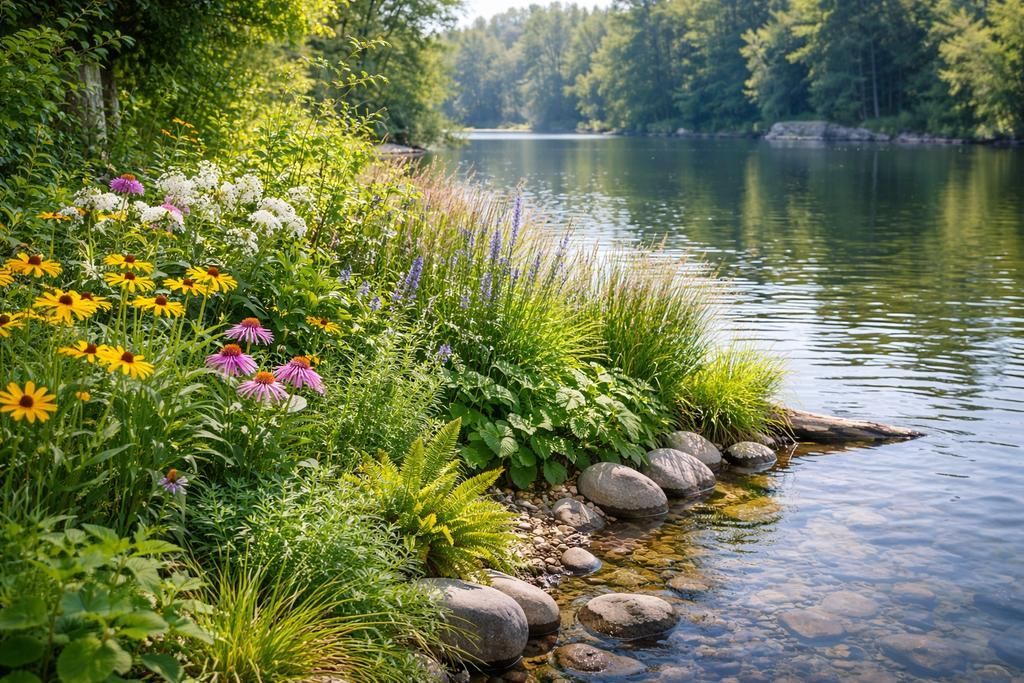
Mowed turf along a pond or stream edge usually roots only a few inches deep, while many native grasses and wildflowers send roots several feet into the soil, which is why lawn-to-water banks so often collapse. Kegley Landscape LLC provides shoreline restoration & erosion control in Navarre, OH, and throughout Stark County using geotextile fabric, stone revetments, and native plantings that work together. We rebuild slumping pond banks, armor stream edges, stabilize sloped yards that lose soil after every storm, and redirect the runoff that causes the damage in the first place. The goal is a waterfront that stays put and still looks natural.
Construction workers pouring concrete at a building site, with a truck in the background
Wet concrete pouring from a truck chute onto a construction site, forming a gravelly slab surface

EVERY STORM TAKES A LITTLE MORE OF YOUR LAND.

Erosion rarely happens all at once. A few inches of bank disappear after a spring rain, a tree root becomes exposed, and one day a whole section of shoreline slides into the water. Sediment then clouds the pond, feeds algae, and fills in the depth you once had. Stopping that cycle early protects both your property and the water itself. Repairs cost far less while the bank still has some shape left.
  • Failing banks rebuilt and reshaped
  • Stone placed to absorb wave energy
  • Fabric installed to keep soil from washing out
  • Native plants added for lasting root strength
Black horizontal line on a white background
SHORELINE RESTORATION & EROSION CONTROL

PONDS AND SLOPES THAT STAY WHERE THEY BELONG.

Whether you own a farm pond, a backyard water feature, or a hillside that sheds soil onto your driveway, the fix starts with understanding how water moves across the site. We study the slope, soil, and flow patterns, then combine structural protection with vegetation that grows stronger over time. The result protects your investment without turning a natural shoreline into a wall of bare rock.

THE TUSCARAWAS RIVER KEEPS US HONEST ABOUT WATER.

The Tuscarawas River runs right through Navarre, OH, and the surrounding countryside is dotted with farm ponds, creeks, and drainage ditches. Heavy local soils hold water, then slump when they become saturated. Our erosion control plans account for those conditions, using the right mix of stone size, fabric, and deep-rooted plantings for each site so repairs hold up through spring floods and freeze-thaw cycles.

WATER HAS TAUGHT US WHERE BANKS FAIL.

Most failing shorelines break down in the same places: at the waterline, where waves undercut the bank, and at the top, where runoff pours over the edge. After 7 years of work across the area, we target both zones instead of patching the symptoms. Our two-person team places materials carefully with equipment sized to limit disturbance. Noticing your pond edge creeping closer each year?

WHAT A STABLE SHORELINE DELIVERS.

Black-and-white icon of a robot arm assembling blocks on a conveyor belt
Land That Stops Disappearing
A protected bank holds its shape season after season. You keep the yard, trees, and structures near the water instead of watching them slowly slide toward the edge.
Car tipping backward into a ditch, shown in a black warning-style icon
Clearer, Healthier Water
Less sediment entering the pond means clearer water and fewer nutrients feeding algae. Fish habitat improves, and the pond keeps its depth instead of filling in over time.
Black-and-white icon of a crashed surveillance camera, tilted and broken on the ground
Safer Access to the Water
Stable, well-shaped banks are easier and safer to walk on. Kids, anglers, and anyone launching a small boat get firm footing instead of crumbling, slippery edges.
Black icon of a falling person with a hazard sign, indicating a slip or fall warning
A Natural Look That Grows In
Native plants soften stone and fabric within 1 or 2 seasons. The shoreline blends into the landscape and attracts pollinators and wildlife instead of looking engineered.
Black pictogram of a person slipping or falling on stairs with motion lines and a handrail.
Lower Long-Term Costs
Addressing erosion early prevents expensive emergency repairs later. Once established, planted and armored banks need only light maintenance to keep performing. You avoid paying to replace lost soil, damaged docks, or fallen trees down the road.
Black icon of a car tipping over a ledge, with a person inside and motion marks above.
Protected Structures Nearby
Docks, outbuildings, driveways, and trees near the water stay supported. Stopping erosion keeps soil in place around their foundations and root zones where it belongs.
Black horizontal line on a white background

our services

OUR SHORELINE AND EROSION CONTROL WORK
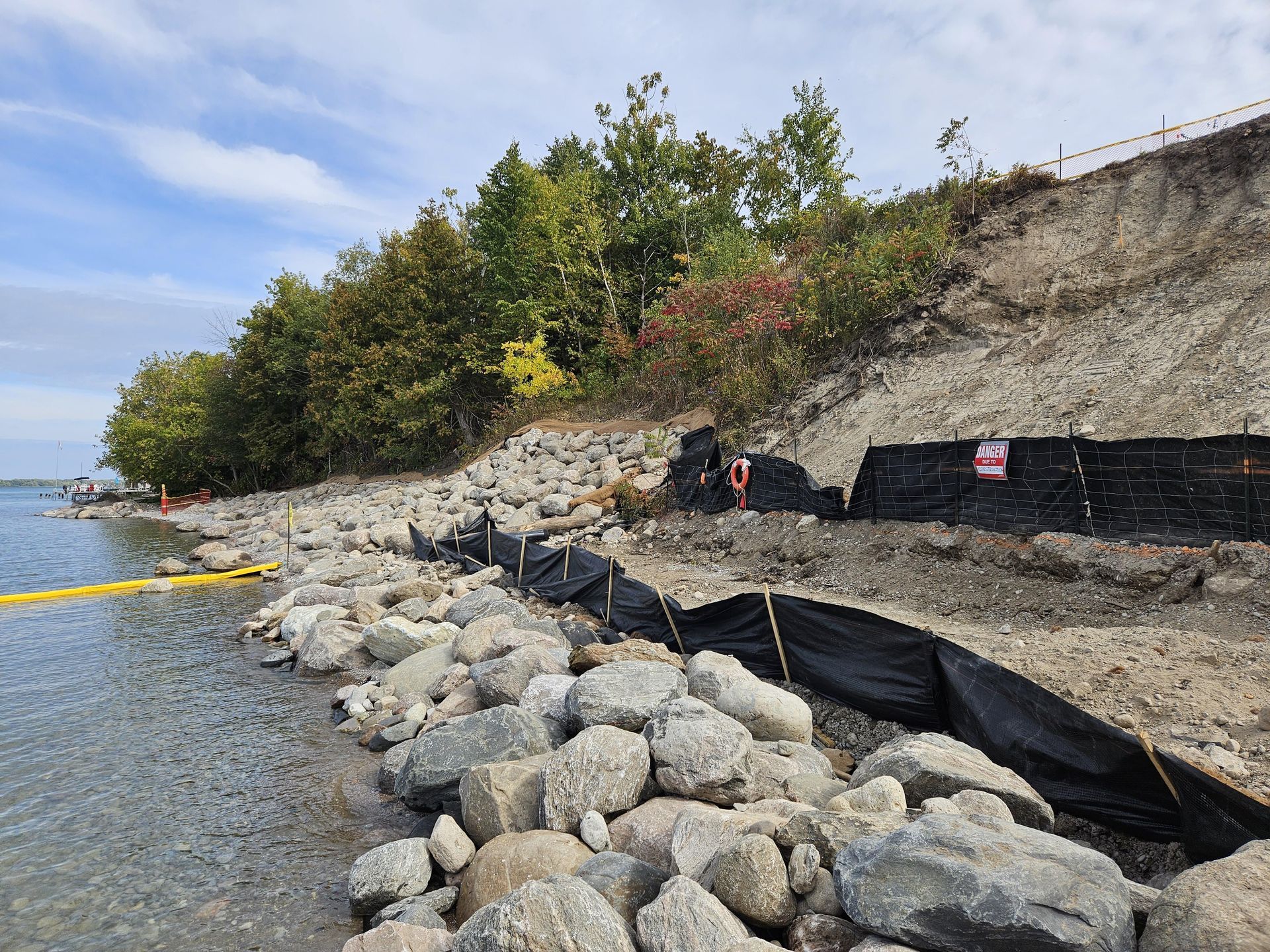
Every eroding site needs its own combination of structure and vegetation. These are the restoration and erosion control services we install for ponds, streams, and sloped properties across the area.
Template premium 99
BANK REPAIR

Shoreline Stabilization


Undercut and slumping banks are reshaped to a stable slope, then protected with materials suited to the water conditions. This restores lost ground and stops the cycle of collapse. The reshaped bank then holds firm.
Template premium 99
STONE ARMOR

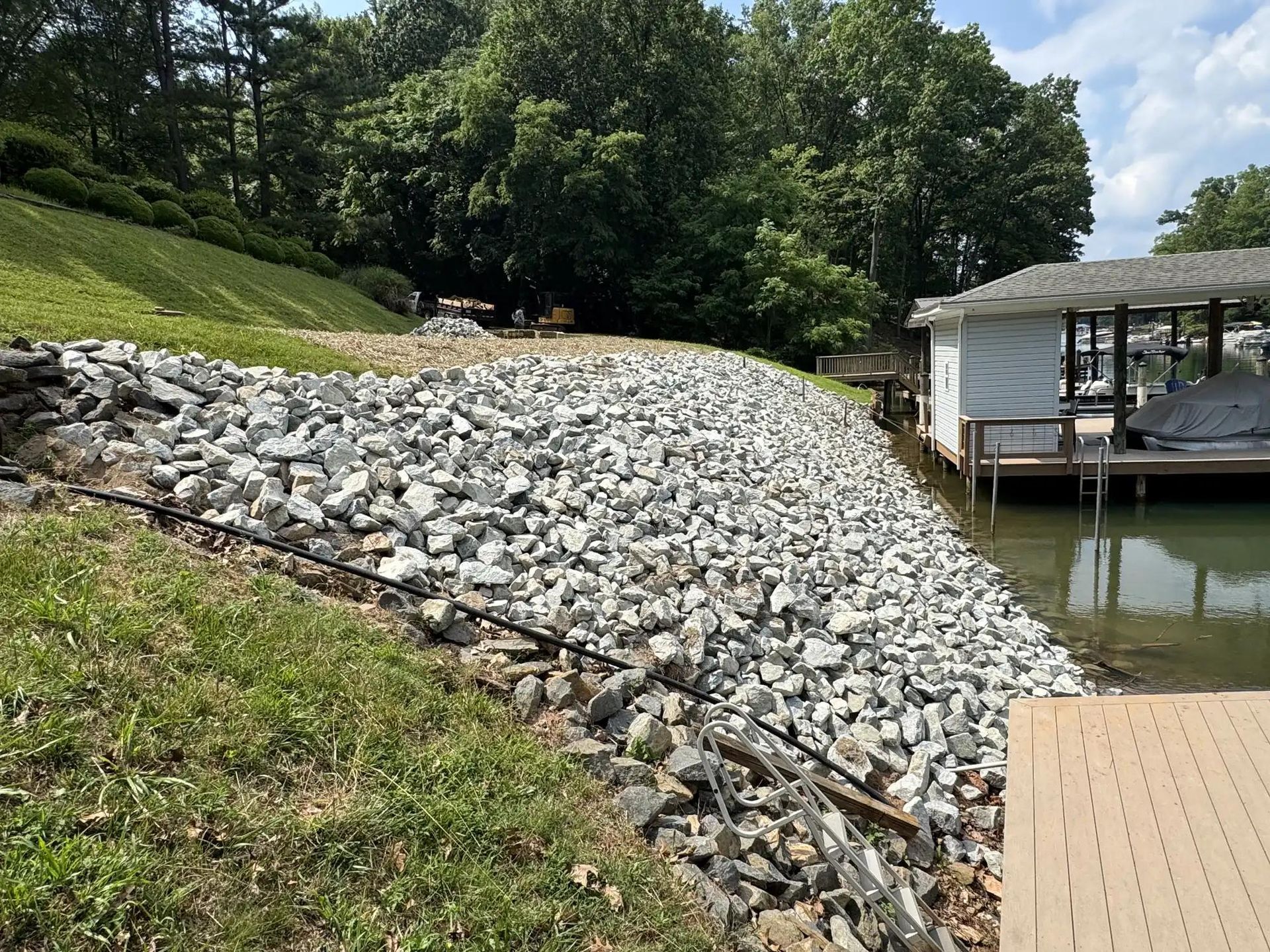
Riprap and Stone Revetments


Properly sized stone placed along the waterline absorbs wave energy and resists ice and flow. We key the stone into the bank so it stays in position through high water.
Template premium 99
FABRIC LAYERS

Geotextile Installation


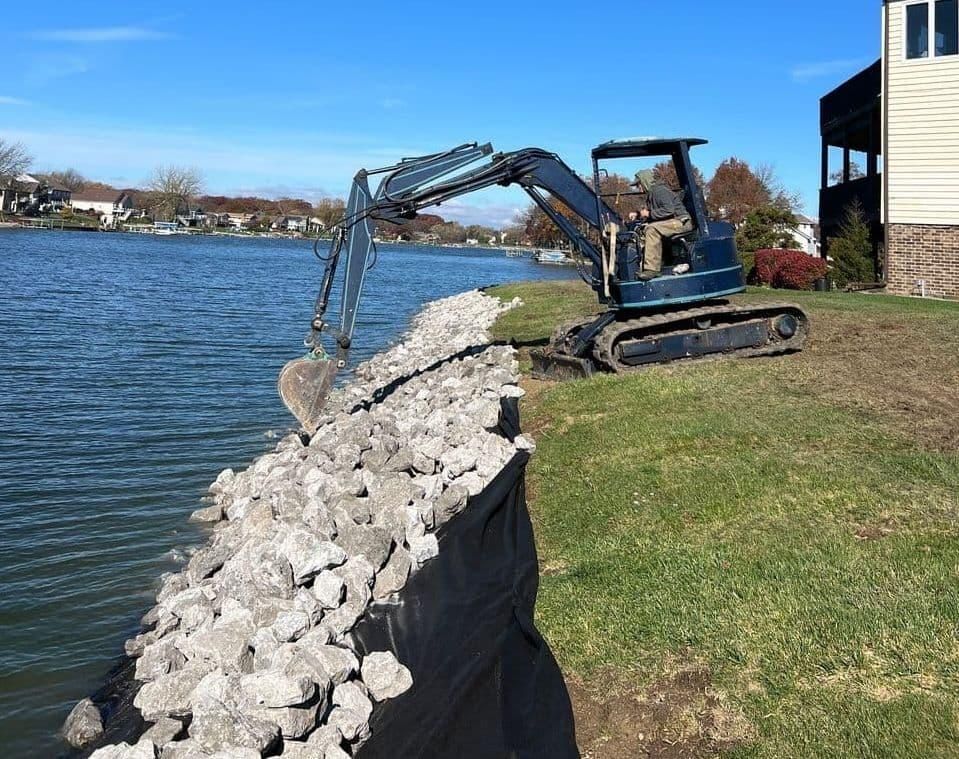
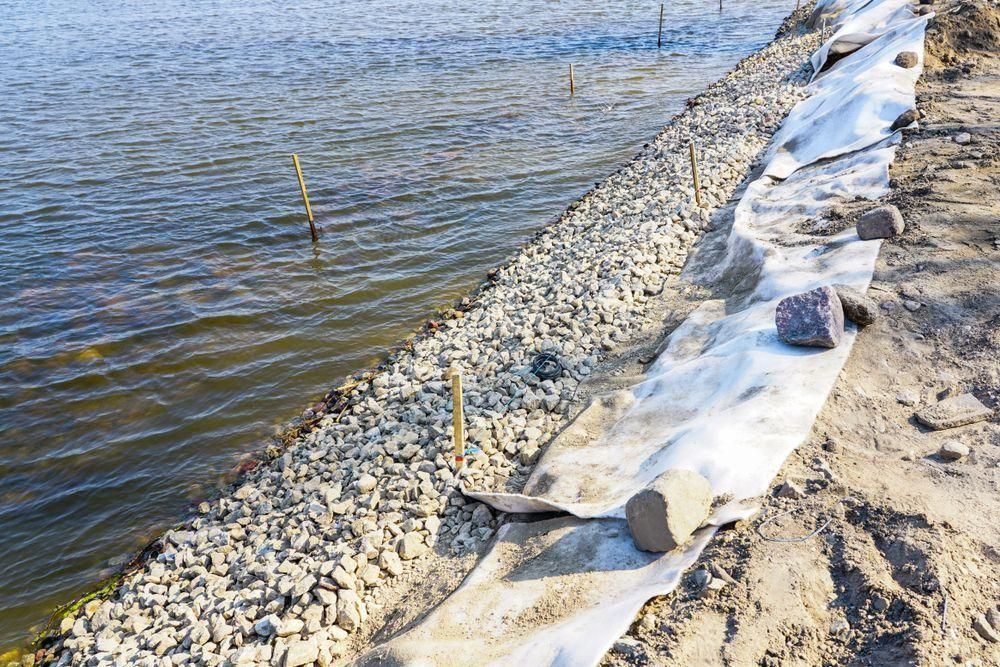
Geotextile fabric separates soil from stone and lets water pass while holding fine particles in place. It is the hidden layer that keeps armored banks from washing out from underneath.
Template premium 99
PLANT BUFFERS

Native Plant Buffers


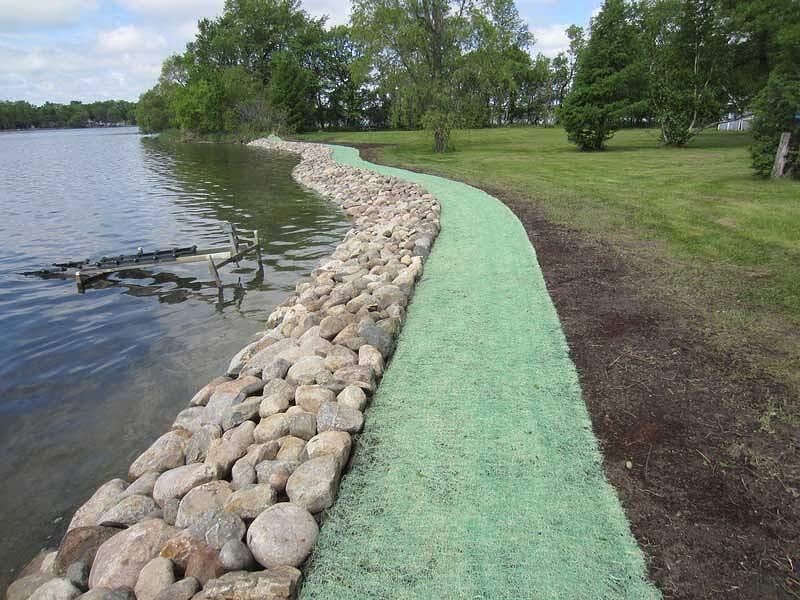
Deep-rooted native grasses, sedges, and wildflowers bind soil along the shoreline and filter runoff before it reaches the water. Buffers also discourage geese and invite pollinators. They bring color and seasonal interest to the waterfront as well.
Template premium 99
SLOPE CONTROL

Hillside Erosion Control


Yards that lose soil down a slope get regraded, planted, and fitted with erosion blankets or stone channels. Runoff slows down and soil stays on the hillside where it belongs.
Template premium 99
UPKEEP VISITS

Ongoing Shoreline Maintenance


After installation, periodic check-ups catch small washouts before they spread. We reset displaced stone, patch fabric, and fill in plantings so your shoreline stays resilient. Small fixes today prevent large repairs later.
Black horizontal line on a white background

THE WORD ON OUR WORK

WHAT OUR CLIENTS SAY.

Property owners who bring us in for erosion problems tend to highlight the peace of mind afterward. They mention careful planning, clear explanations, and banks that finally held through the next heavy rain instead of washing away again.
Black horizontal line on a white background.
FAQ

FREQUENTLY ASKED QUESTIONS.

Erosion along ponds and slopes can feel overwhelming. These answers explain how shoreline restoration works, what materials we use, and what property owners can expect from the process.

What causes a pond bank to erode?

Wave action, fluctuating water levels, runoff pouring over the top, and shallow-rooted turf are the usual culprits. Burrowing animals and heavy foot traffic can also weaken banks, especially where soil stays saturated.

Is riprap or native planting better for erosion control?

Most sites need both. Stone handles wave energy right at the waterline, while native plants stabilize the upper bank and filter runoff. Combining them creates protection that is strong and still looks natural.

How long does it take native plants to establish on a shoreline?

Most native plantings root in during their first season and reach full strength within 2 to 3 years. Temporary erosion blankets or fabric protect the soil while roots grow deep enough to hold it.

Do I need a permit for shoreline work?

Work on a private pond generally needs no permit, but projects along streams, rivers, or wetlands may require state or federal approval. Checking early avoids delays, especially for sites near regulated waterways like the Tuscarawas River.

Can erosion on a sloped yard be fixed without a retaining wall?

Often, yes. Regrading, erosion blankets, deep-rooted plantings, and redirected downspouts can stabilize moderate slopes. Kegley Landscape LLC in Navarre, OH, recommends a wall only when the slope is too steep to hold on its own.

How can I keep geese off my pond banks?

Geese prefer open, mowed lawn running straight to the water. A buffer of taller native plants along the shoreline blocks their sightlines and walking path, making the area far less attractive to them.

What maintenance does a restored shoreline need?

Inspect banks after major storms, replace any stone that shifts, and remove woody saplings or invasive plants from the buffer. Light yearly care keeps the protection working for many years.

Why choose Kegley Landscape LLC for shoreline restoration in Navarre, OH?

Kegley Landscape LLC in Navarre, OH, treats erosion as a water problem, not just a soil problem. We combine excavation, drainage, stone work, and planting in one plan, and the same two people handle your project from assessment to walk-through.

    Short black horizontal line on a white background
    HOW WE WORK

    FROM WASHED-OUT BANK TO STABLE SHORE, HERE IS HOW.

    STEP 01

    ASSESSING THE EROSION
    We visit your property to evaluate the shoreline, slope, soil, and where runoff enters. Understanding what is causing the damage shapes every decision that follows. We also look at upstream runoff that may be feeding the problem.

    STEP 02

    DESIGNING THE FIX
    Our team builds a plan that pairs the right stone, fabric, and plants with any drainage changes needed. You get a clear, handwritten estimate outlining every material and task. Material choices are explained so you understand each one.

    STEP 03

    RESHAPING THE BANK
    Collapsed and undercut sections are cut back and regraded to a stable angle. Loose material is removed so new protection sits on firm, undisturbed soil. Excess material is hauled off or reused on site where it helps the grade.

    STEP 04

    PLACING FABRIC AND STONE
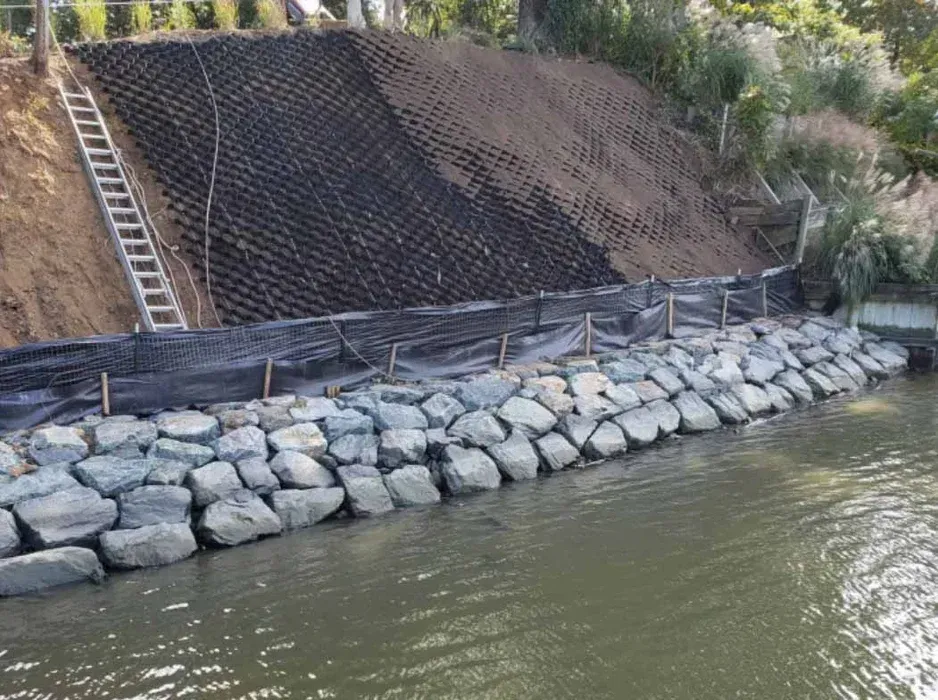
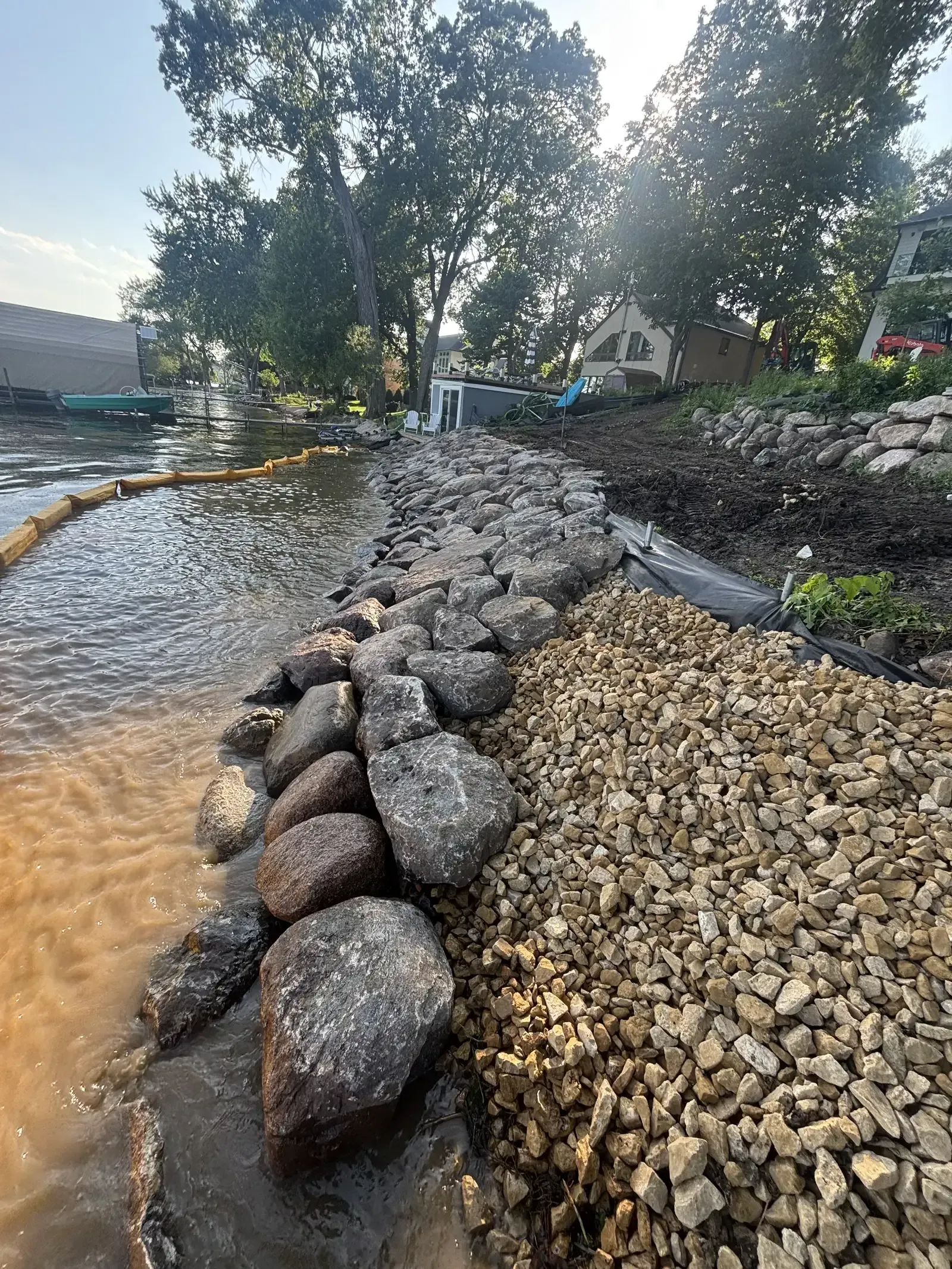
    Geotextile goes down first, followed by stone keyed into the toe of the bank. Equipment is positioned carefully to limit disturbance to the surrounding landscape. Each stone is set so it locks against its neighbors.

    STEP 05

    PLANTING THE BUFFER
    Native grasses, sedges, and flowering plants go in above the stone line. Erosion blankets protect bare soil until the new root systems take hold. Plants are spaced so they knit together quickly and shade out weeds.

    STEP 06

    WALKING IT WITH YOU
    We inspect the finished shoreline together, explain how to care for the plantings, and share tips for spotting early trouble after heavy storms. You will know exactly what to watch for as the new plantings mature.